How to Choose Bullet Proof Windows in 2026?
Choosing Bullet Proof Windows in 2026 requires more than comparing glass thickness or product photographs. A secure window must match the real threat, building design, installation method, and local requirements. Security-glazing consultant John M. McCaffrey offers a practical warning: “The window is not a single product; it is a tested assembly.” That idea matters.
Look for independently tested systems, not impressive marketing language. Review the glazing, frame, anchors, seals, mullions, and surrounding wall. A strong pane can still fail when its frame flexes or its fasteners pull loose. Ask suppliers which standards apply, such as UL 752, NIJ 0108.01, or ASTM F1233. Confirm the exact test level and ammunition type. Do not accept vague claims like “maximum protection.”
Real project experience also matters. A school entrance, embassy reception area, retail counter, and private residence need different layouts. Consider visibility, daylight, ventilation, emergency access, maintenance, and replacement time. Laminated glass may remain in place after impact, but it can become cloudy, cracked, or difficult to operate. That is not a minor detail.
Choose the whole system.
An honest evaluation should include weaknesses. No window provides unlimited protection. Installation errors can undermine certified performance. Product labels can also confuse non-specialists. Request test reports, installation drawings, warranties, and references from comparable projects. Then have a qualified security professional review the design. The best Bullet Proof Windows solution is not necessarily the thickest option. It is the one that performs predictably, fits the building, and remains practical every day.
Define the Threat Using UL 752 Levels 1–10 and EN 1063 BR1–BR7
Choosing bullet-resistant windows in 2026 starts with defining the threat, not selecting the thickest glass. UL 752 Levels 1–10 classify resistance against specific ammunition and test conditions. A higher level generally addresses more severe ballistic threats, but it does not guarantee protection against every projectile. Ask for the exact tested cartridge, velocity, shot pattern, and impact distance.
EN 1063 uses BR1–BR7 for bullet-resistant glazing. BR1 covers lower-energy handgun threats, while BR7 addresses high-powered rifle ammunition under defined test conditions. These ratings are not direct equivalents to UL 752 levels. A window rated BR4 may not match one labeled UL Level 4. Certification details matter more than the number alone. Check whether the glazing passed with or without splinters. The “S” and “NS” classifications can affect interior safety. Frames, joints, anchoring, and wall construction must also support the same protection level. A strong pane in a weak frame is an expensive mistake.
Tips: Write down the realistic threat before requesting quotations. Include weapon type, ammunition, firing distance, and likely impact angles. Request independent test reports, not only sales descriptions. Confirm the complete assembly was tested. Installation deserves careful review. Even small gaps can reduce performance. I have seen projects focus heavily on glass thickness and overlook the surrounding wall. That choice can fail under pressure. Recheck local building, fire, emergency-exit, and accessibility requirements before installation. Ratings should guide decisions, not replace professional assessment.
How to Choose Bullet Proof Windows in 2026?
Define the threat using UL 752 Levels 1–10 and EN 1063 BR1–BR7. The chart compares approximate test-projectile energy, calculated from published projectile mass and test velocity values. Higher energy does not alone determine the required glazing: projectile construction, shot pattern, impact distance, angle, and the complete tested assembly are also critical.
UL 752 and EN 1063 are different test systems and their levels are not directly interchangeable. Always specify the required standard, threat type, shot sequence, and complete window assembly when selecting protective glazing.
Match Threats to NIJ 0108.01 Classes I–IV and Required Impact Energy
Choosing bullet resistant windows in 2026 starts with the threat, not the glass thickness. NIJ 0108.01 Class I addresses .22 LR impacts, producing approximately 141 joules. Class II covers stronger handgun threats, including 9 mm and .357 Magnum rounds, reaching about 932 joules. These figures are test conditions, not casual estimates.
Class III-A raises protection to approximately 1,480 joules, using threats such as .357 SIG and .44 Magnum. Class III is designed for rifle threats and requires roughly 3,430 joules. Class IV reaches about 4,160 joules against an armor-piercing rifle test threat. The required impact energy matters because a window resisting one handgun test may fail against rifle energy.
Check the complete assembly, not only the pane. Frames, joints, glazing beads, and wall connections can become weak points. Ask for independent laboratory documentation showing the exact NIJ class and tested configuration. Installation details matter more than many buyers expect. Real buildings are rarely perfect. I have seen specifications overlook mullions and edge protection. That mistake deserves review. Also confirm whether the rating applies to a fixed window, operable unit, or transaction opening. NIJ 0108.01 evaluates ballistic-resistant materials, so project engineers should verify how the full window system performs under the intended conditions.
How to Choose Bullet Proof Windows in 2026? — Match Threats to NIJ 0108.01 Classes I–IV and Required Impact Energy
Important selection note: The energy values above are approximate kinetic-energy calculations based on the nominal projectile mass and velocity: E = ½mv². They are useful for comparing threat levels but do not replace a formal NIJ 0108.01 test rating. Actual bullet-resistant performance also depends on projectile construction, impact angle, hit location, spacing between impacts, temperature, glazing composition, frame design, installation quality, and the supporting structure.
Reference basis: NIJ Standard 0108.01 ballistic-resistant protective materials classification and its reference projectile specifications. “Bullet-resistant” is the technically preferred term; no transparent material should be described as universally bulletproof.
Verify EN 1063 Performance with 3 Shots Spaced 120 mm Apart
How to Choose Bullet Proof Windows in 2026?
When selecting bullet-resistant windows, verify the complete EN 1063 test report, not only the product label. EN 1063:2000 requires three shots arranged in a triangle, with impact points spaced 120 ± 10 mm apart. The ammunition type, bullet velocity, and glass construction must match the declared resistance class. For example, the BR2 test uses 9 mm ammunition at approximately 400 m/s, while BR7 uses 7.62 × 51 mm ammunition at approximately 820 m/s. These figures come from the EN 1063 test classification tables published by the European Committee for Standardization.
Look closely at the test photographs. Glass may stop penetration but still release dangerous fragments from the protected side. EN 1063 therefore distinguishes resistance levels with and without splinter protection. I would ask for the exact specimen thickness, frame details, mounting method, and laboratory accreditation. A certificate for glass alone may not represent the installed window. That mistake happens often. The three-shot pattern also matters. Impacts placed too closely can produce a different failure response than the prescribed 120 mm spacing. Check whether the report records penetration, back-face spall, and visible cracking after all three impacts. Installation quality remains a weak point, especially around corners, fasteners, and joints. A strong pane in a poorly tested frame is not a complete protective assembly.
Specify Tested Glazing, Frames, Mullions, and Anchors as One Assembly
How to Choose Bullet Proof Windows in 2026?
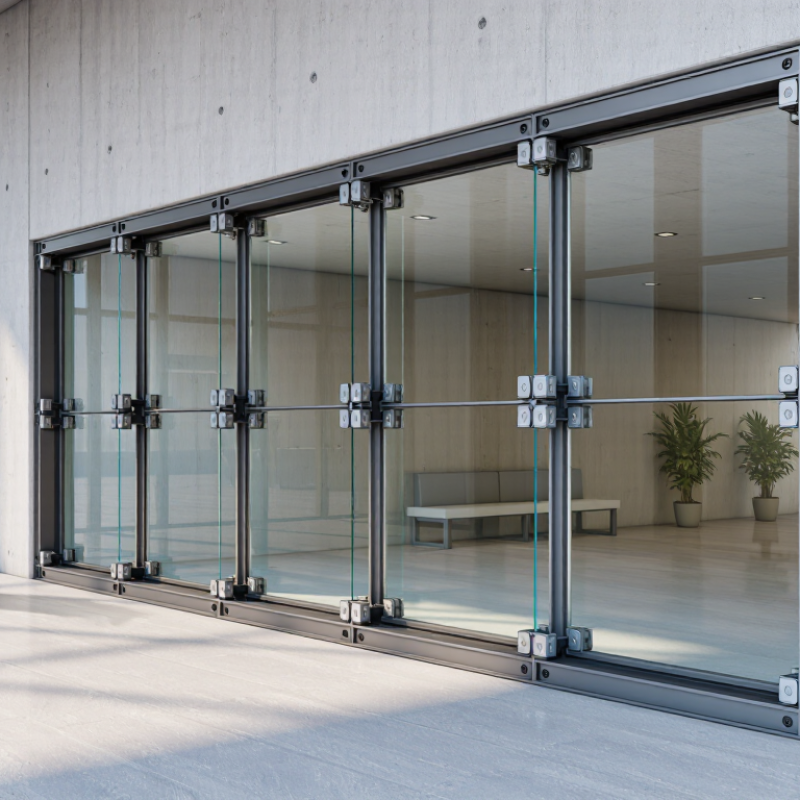
Specify tested glazing, frames, mullions, and anchors as one assembly. “Bullet proof” is imprecise; professionals usually say bullet-resistant. UL 752 and ASTM F1233 evaluate the construction submitted for testing, not glass in isolation. A laminated glazing unit may meet a target level, yet fail after installation in a weaker frame. I have seen specifications focus on glass thickness while ignoring the anchor pattern. That is an expensive blind spot.
Request the complete test report, including glazing type, interlayer, frame material, mullion size, fasteners, and support conditions. Check whether the tested dimensions match the proposed opening. A larger window can behave differently. The 2021 FEMA P-361, Fourth Edition, specifies a 15-pound 2x4 missile traveling at 100 mph for certain tornado safe-room tests. That figure is not a ballistic rating, but it demonstrates why hazard-specific testing matters. Security glazing should also address edge capture, deflection, spall control, and interior fragment retention. These details are often treated as secondary. They should not be.
Tips: Ask for a signed assembly test report and installation drawings. Confirm anchor spacing with the structural engineer. Inspect corners and mullion joints on site. If the supplier cannot identify every tested component, pause procurement. My own preference is conservative: accept a smaller certified opening before accepting an untested substitution. It may look less elegant, but appearance cannot verify performance.